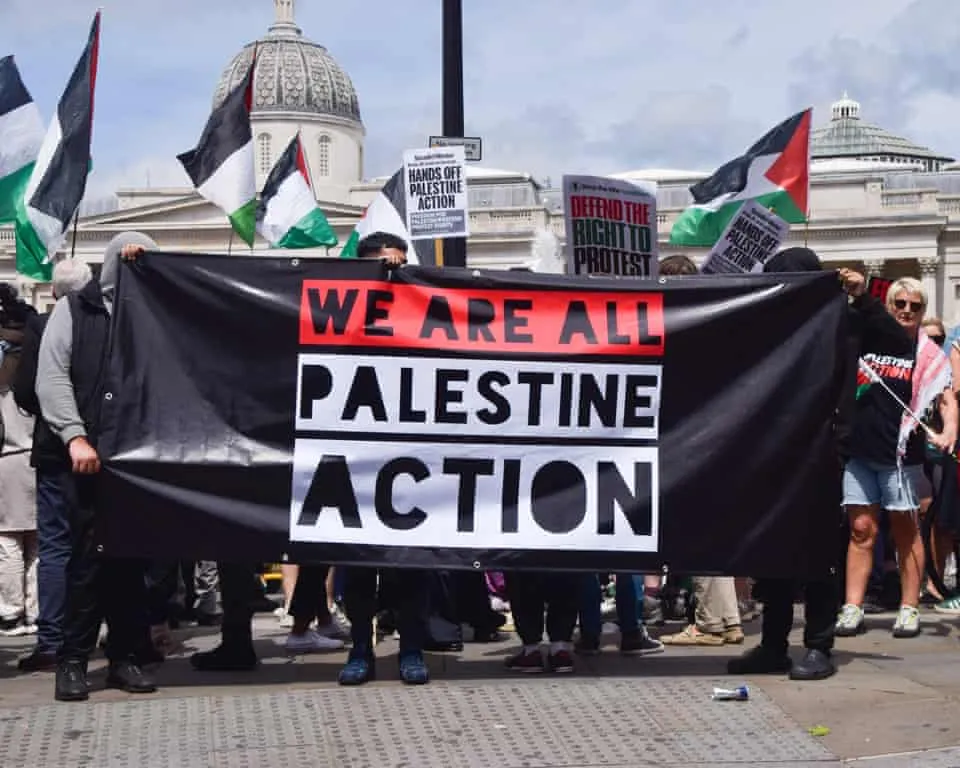
Washington (QNN)- The US has imposed sanctions on the UK-based direct-action group Palestine Action, designating it as a Specially Designated Global Terrorist (SDGT), in the latest escalation in the Trump’s administration’s crackdown on groups and individuals critical of Israel.
Palestine Action is now sanctioned in the US "for having materially assisted, sponsored, or provided financial, material, or technological support for, or goods and services to or in support of, an act of terrorism", the Department of the Treasury said in a statement on Wednesday.
The decision comes a year after the UK banned the group for damaging materials at weapons factories run by Elbit Systems, a key provider of weapons to the Israeli military, which has for nearly three years carried out a genocide against Palestinians in Gaza.
The sanctions allow the US to freeze the assets of foreign individuals and entities. As well as freezing the assets of those sanctioned, the listing forbids US citizens and entities from doing business with them.
The SDGT list was first established just days after the 11 September 2001 attacks, when President George W Bush signed Executive Order 13224.
"As outlined in E.O. 13224 of September 23, 2001, however, 'violent acts and acts dangerous to human life, property, or infrastructure, that appear to be intended to intimidate or coerce a civilian population, or to influence the policy of a government by intimidation or coercion' are defined as terrorism."
In addition to Palestine Action, the Trump administration also announced sanctions on Masar Badil, a movement that advocates for an "alternative revolutionary path" for Palestinian rights and freedoms, after decades of failed attempts at negotiations.
"Masar Badil is inextricably linked with Samidoun, and described by one of its senior leaders as part of the same political project. The organizations share fundraising mechanisms as well as senior leaders and members," the Treasury said.
Samidoun was sanctioned by the US and Canada in 2024. It has denied all terror links.
Palestine Action was founded in 2020 after activists broke into and spray painted the London headquarters of Elbit Systems, Israel’s largest arms firm.
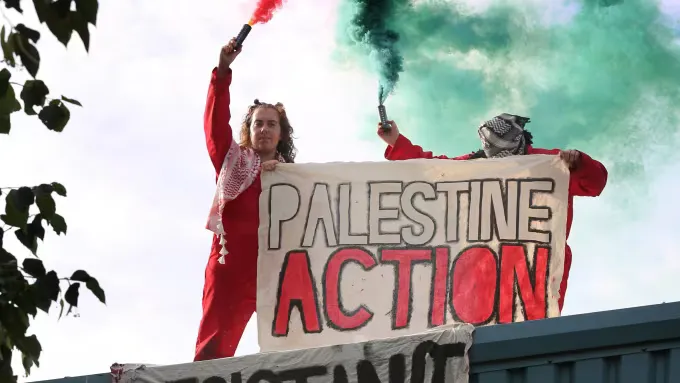
Its network of activists have subsequently used tactics, including direct action, to target what it says are the “corporate enablers of the Israeli military-industrial complex". Actions have included breaking into offices and factories to spray-paint or damage equipment they say is used to commit war crimes in the occupied Palestinian territories.
Elbit is the group's primary target, prompting multiple companies to sever ties with the defence contractor, and costing the company “billions” in lost contracts and divestments, according to Palestine Action.
Barclays, which owned 16,000 shares in Elbit Systems, divested from the contractors in October, while the UK’s Ministry of Defence cancelled £280m worth of contracts with the company.
In July 2025, Palestine Action became proscribed under Section 3 of the UK's Terrorism Act 2000. That made it a criminal offence to be a member of the group "or to invite or recklessly express support for them".
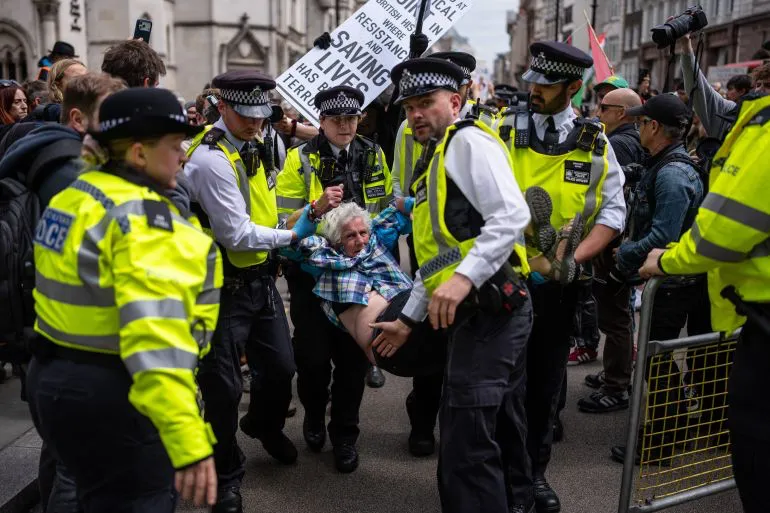
Since then, hundreds of protesters including elderly and disabled activists have been arrested by British police simply for holding signs that say "I support Palestine Action".
The co-founder of Palestine Action, Huda Ammori, who is behind the legal challenge to the UK ban, said in response to the US decision: “Palestine Action’s activities in the US and elsewhere have always been about saving lives by disrupting the Israeli war machine, which is committing a genocide in Gaza with the support of the US government. Trump has been at the centre of the mass murder of Palestinians, enabling the Zionist regime at every turn.”
“The fact that Trump is now taking inspiration from Britain’s repression of the movement for Palestinian freedom exposes just how dangerous this ban is and should be a wake-up call to anyone who cares about free speech and civil liberties."
"By banning a direct action protest group under terrorism legislation for the first time in British history, Keir Starmer’s government has created a blueprint for authoritarian governments around the world to suppress political dissent, and to criminalise British citizens who travel or live abroad."
“Trump’s decision to adopt Keir Starmer’s designation of Palestine Action as a ‘terrorist’ group should be the final nail in the coffin of this dangerous, draconian and disproportionate ban.”
In March last year, Donald Trump’s Turnberry golf course on the west coast of Scotland was targeted by protesters. The clubhouse at the five-star resort in Ayrshire was graffitied and the course dug up and painted with the words “Gaza is not 4 sale”.
The UK civil rights group Defend Our Juries echoed Ammori’s comment.
“We’ve warned since July 2025 that Keir Starmer’s unprecedented ban on Palestine Action would embolden autocrats and demagogues around the world. Today that warning has proved to be well-founded,” it said. “Whilst bowing down to the arms industry and Israel lobby, the UK government has encouraged Trump to escalate his domestic crackdown on civil liberties.”
A British court revoked the designation in February, but the decision was overturnedon appeal in June. Palestine Action has continued to challenge the ban, taking the case to the UK Supreme Court.
The US has been relying on sanctions to punish supporters of Palestinian rights across the world who oppose the Israeli occupation.
Last year, the Trump administration imposed penalties on United Nations rapporteur Francesca Albanese. Washington has also sanctioned International Criminal Court officials, most recently the tribunal’s president, Tomoko Akane.