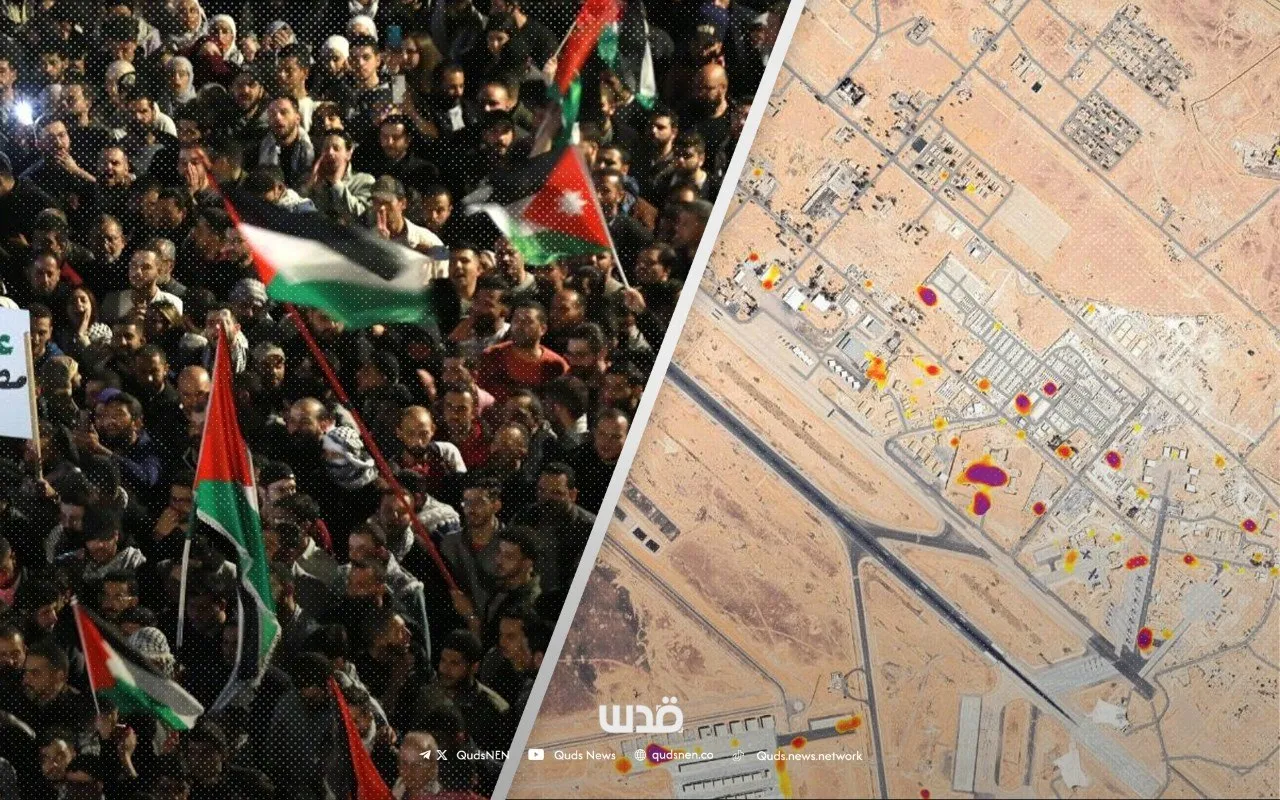
Jordanian authorities have started demolishing and evacuating the properties of Jordanian citizens in the vicinity of the Muwaffaq Salti air base in Al-Azraq, the principal hub for US military operations in the country, according to the Jordanian outlet Jordan Voice. The demolitions are being carried out to expand the security cordon around the base and its American forces, making ordinary Jordanians and their land pay the price for the protection of foreign troops stationed on their soil.
The move follows a series of Iranian strikes that have directly targeted the base. In recent weeks, Iranian missiles and drones have increasingly struck US military forces and installations in Jordan, with the Muwaffaq Salti base, one of the largest air bases in the country and a central node for American operations against Iran, among the primary targets. A strike on the base in July killed US troops on Jordanian soil, the deaths that later surfaced in a tense session of Jordan's parliament, where a lawmaker's suggestion that the chamber offer condolences to the United States was met with shouts from other members, one of whom accused the US military of killing children, women, and the elderly. The attacks have repeatedly set off sirens across the kingdom and pulled Jordan deeper into a regional war it wanted no part of.
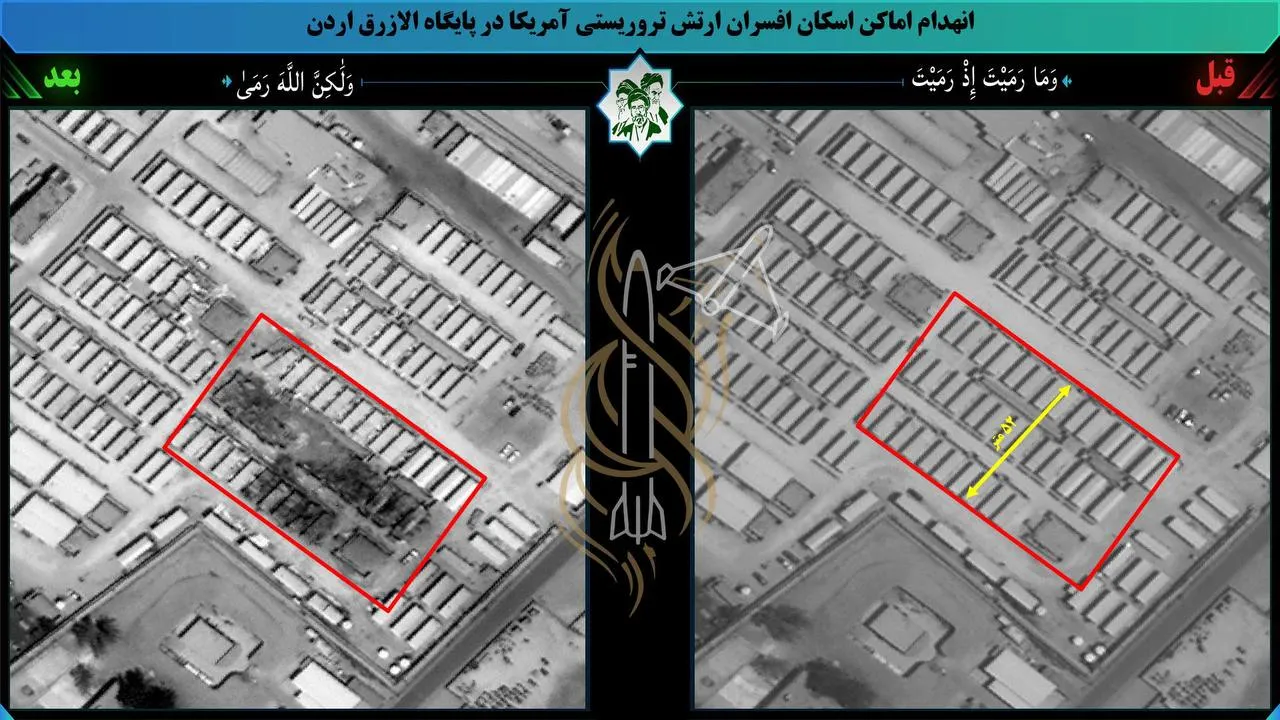
Before-and-after satellite imagery showing the direct impacts of Iranian strikes on the Muwaffaq Salti air base in Jordan, July 20, 2026. Source: Middle East Spectator (Telegram).
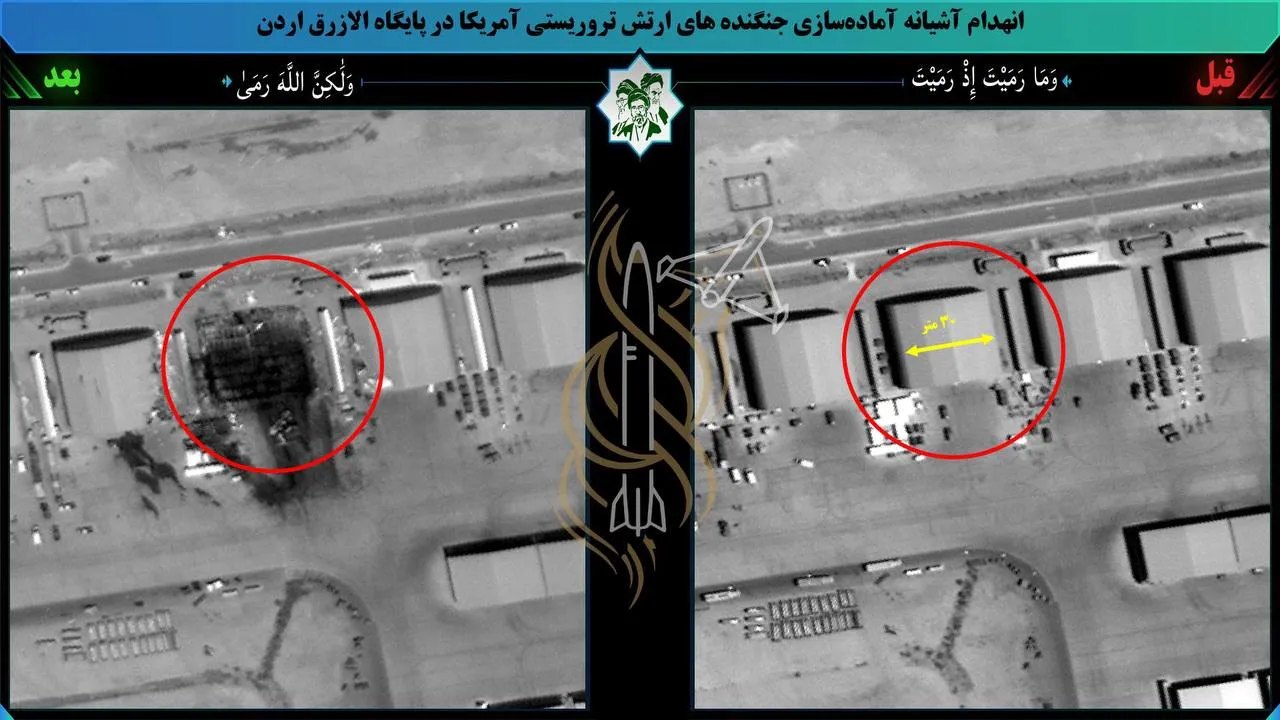
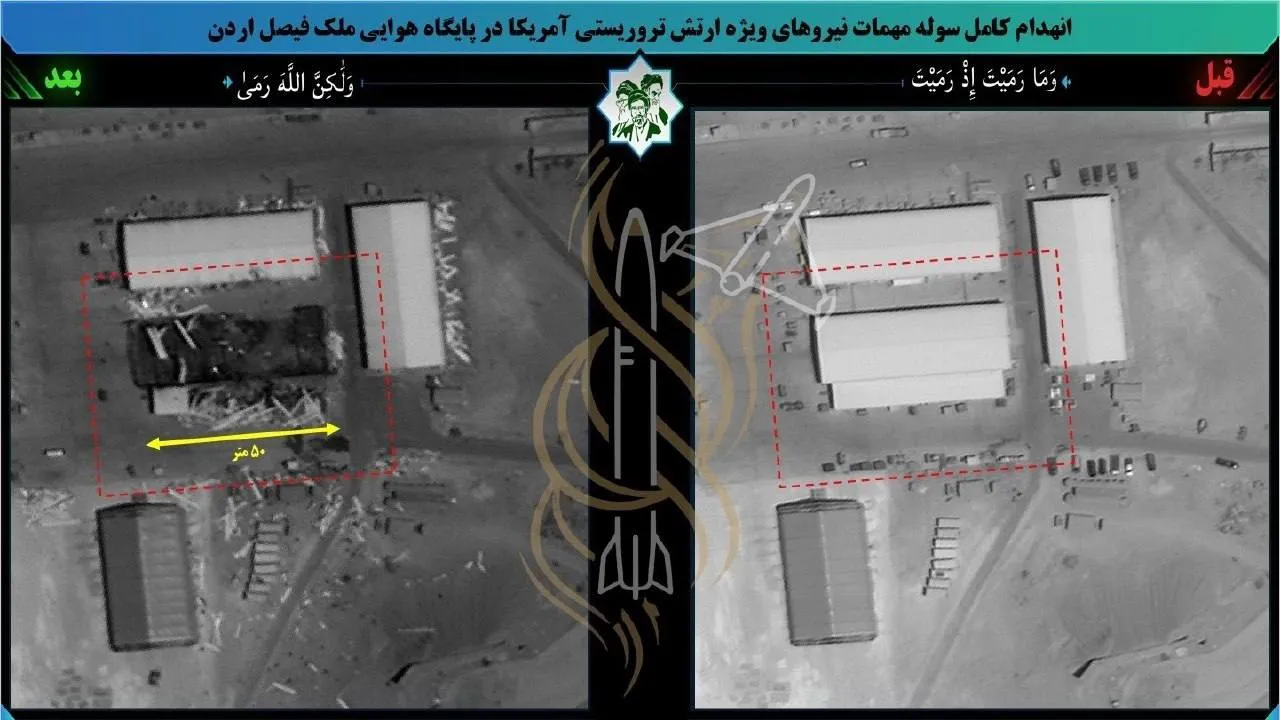
Before and after: Iranian strike impacts on Jordan's King Faisal air base, July 20, 2026. Source: Middle East Spectator (Telegram).
Rather than reconsider the foreign military presence that has turned Jordanian territory into a target, the authorities have chosen to clear Jordanian homes and property to shield that presence, treating the safety of American forces as a higher priority than the property, livelihoods, and rights of Jordanian citizens. The demolitions lay bare the cost that ordinary Jordanians are being made to bear for their government's alliance with Washington.
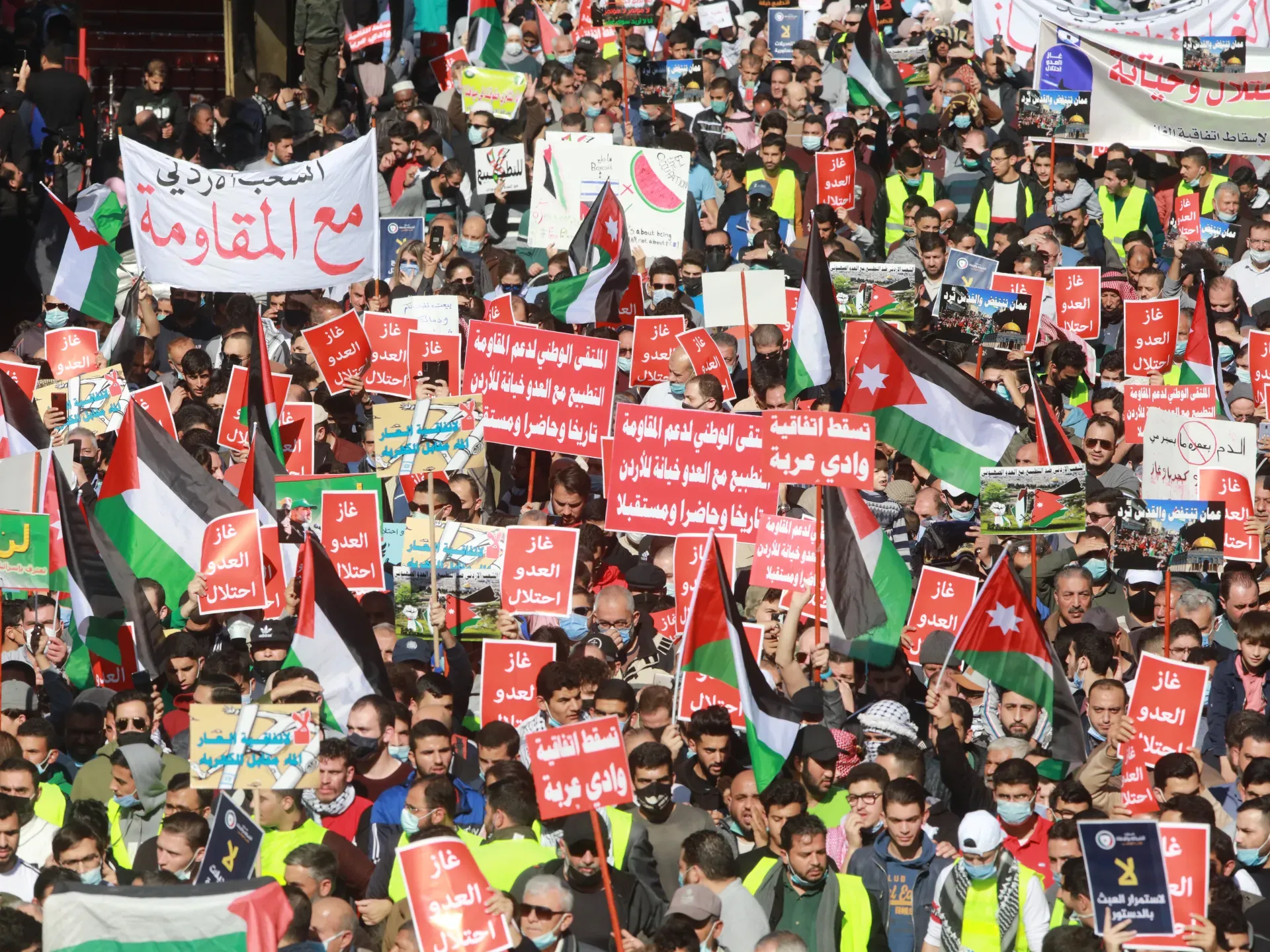
That cost has begun to break the silence in a country where dissent is heavily policed. In a rare public challenge to the government, hundreds of Jordanian political, legal, and civil figures signed an open letter demanding the withdrawal of US forces from Jordan. The signatories warned that the American troop presence exposes Jordan to security, political, and economic risks that serve no national interest, and increases the likelihood of the country being dragged into a regional conflict to which it is not a party.
Jordan hosts some 4,000 American soldiers and serves as a hub for US military operations across the Middle East. After the United States and Israel launched their war on Iran, Tehran responded with strikes against American allies and installations in the region, including in Jordan, turning the kingdom into a battleground for a confrontation its people did not choose. The war immediately battered Jordan's economy, striking at a tourism sector that provides up to 18 percent of state revenue, in a country already burdened by high unemployment and heavy dependence on foreign aid. Last year, the United States provided Jordan with 1.65 billion dollars in economic and military assistance, a dependence analysts cite to explain the government's unwavering alignment with Washington even as the strikes multiply.
For many of those who signed the letter, the deeper grievance is that Jordan's resources and territory are being used in the service of the United States and Israel. Sufyan al-Tell, a 90-year-old political activist, said he signed to show the world the gap between the government's position and that of the Jordanian people, saying Jordanians do not accept their country being exploited to defend Israel. He noted that the presence of US forces had itself endangered Jordanians, including from the debris of Iranian missiles intercepted by American air defenses over Jordan, and warned that the government's response to the dissent was to open the prison doors and drag signatories to jail one after another.