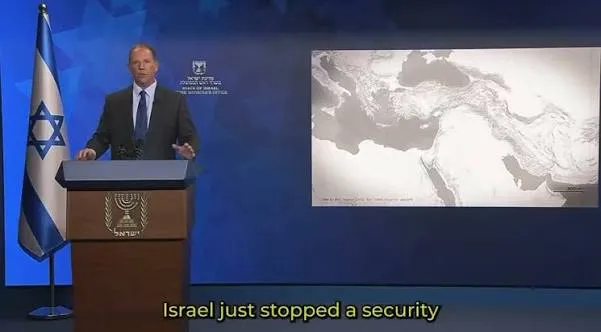

Ankara (QNN) - Turkey is seeking an Interpol Red Notice for war criminal Benjamin Netanyahu over Israel's interception of a Gaza-bound aid flotilla, Israeli media reported. The move follows arrest warrants Turkish prosecutors issued for Netanyahu and other senior Israeli officials in connection with Israel's assault on the flotilla, part of Ankara's widening legal campaign against Israeli leaders over the genocide in Gaza.
Netanyahu's office responded not with a legal rebuttal but with a barrage of insults and threats. It branded Turkish President Recep Tayyip Erdogan an "antisemitic dictator," accusing him of massacring Kurds, harboring Hamas, occupying northern Cyprus, and imprisoning journalists and political opponents. The office dismissed what it called Erdogan's pathetic attempt to intimidate the leaders and soldiers of Israel, which it described as the only true democracy in the Middle East, insisting the effort would go nowhere.
Most significantly, Netanyahu's office turned the exchange into a warning over Syria, declaring that Israel would not tolerate what it called Turkey's efforts to extend its aggression against Israel into Syrian territory. The threat laid bare the real source of the escalation: not the flotilla case alone, but Israel's growing alarm at Turkey's expanding military footprint across the region, and its readiness to strike to prevent it.
That readiness was on display days earlier. On August 18, Israel struck the Abu al-Duhur air base in Idlib, in northern Syria, hitting the runway and military facilities in eight strikes. Israel claimed it acted because Syria was about to allow Turkish forces to deploy at the base, despite repeated Israeli warnings, a deployment Ankara denied was planned. Israel struck the infrastructure before any Turkish troops, aircraft, or air defenses arrived, a calculated move to destroy the site's military value before a Turkish presence could take root.
The strike reflects an emerging Israeli doctrine, aired openly in Israeli media, that treats Turkey's expansion into Syria as a threat to be pre-empted by force. According to that thinking, Israel intends to act before Turkish troops arrive, because once they are on the ground, striking would risk Turkish casualties, retaliation, and a confrontation with a NATO member. Israeli commentators have argued that Turkey's membership in NATO offers its soldiers no protection on Syrian soil, contending that the alliance's mutual-defense guarantee covers Turkish territory but not Turkish forces deployed abroad, and that Israel is therefore free to strike them. The message from Israel is that it will act before what it calls the flag arrives, and that the flag will not shield the target once it does.
The posture extends beyond Syria. Israeli strategists have signaled that they view Turkey's military presence in occupied northern Cyprus, its maritime claims in the Eastern Mediterranean, and its expanding bases as far as Somalia as part of a single Turkish drive for regional depth that Israel intends to contest. The framing casts Ankara's growing reach as a threat to Israeli access and interests across the region, and serves as a justification for Israeli action against Turkish assets wherever they appear.