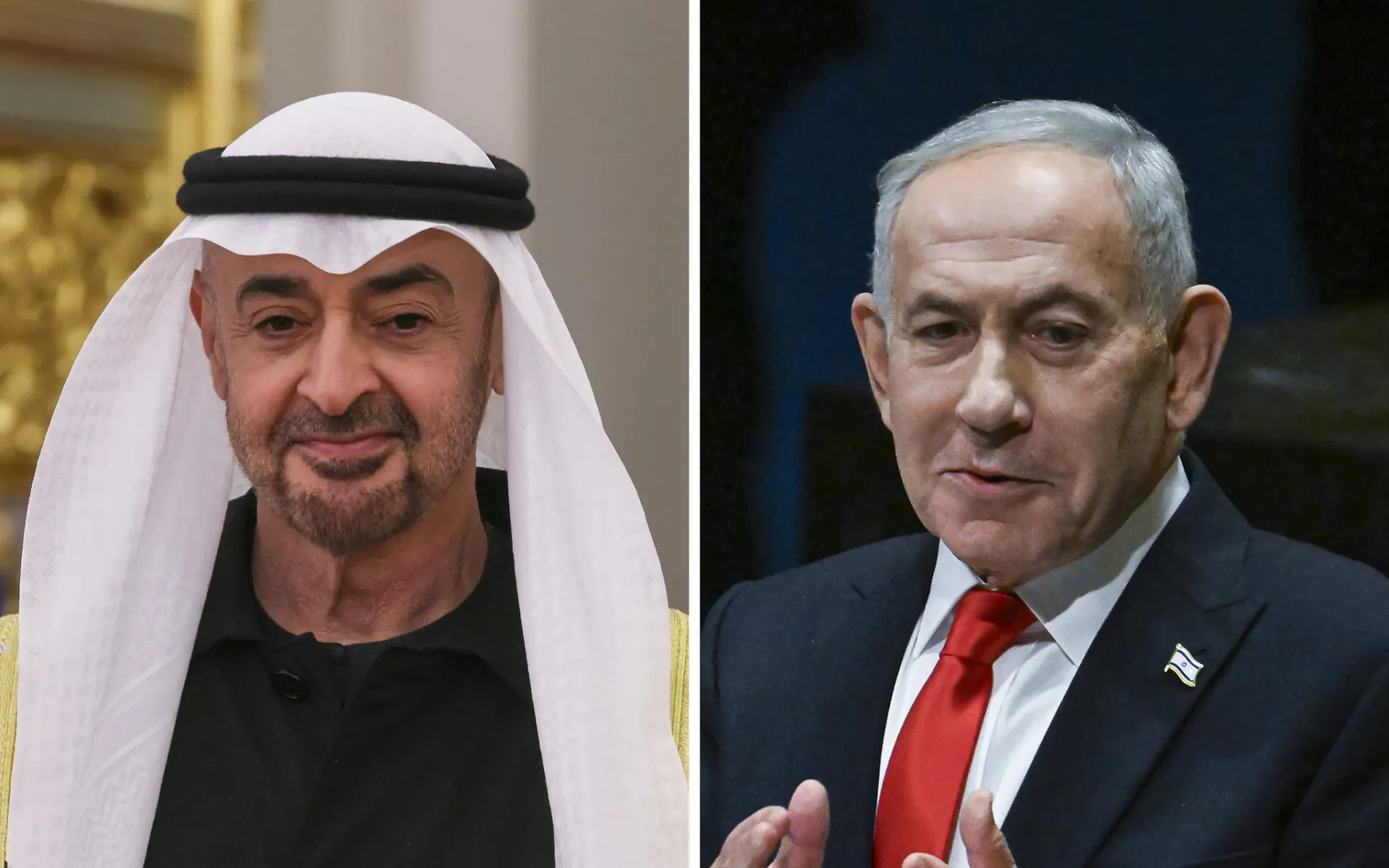
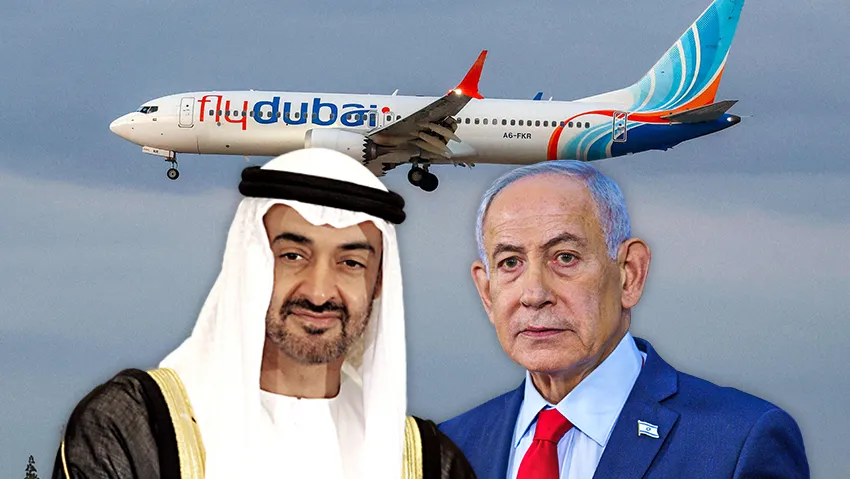
A source close to the UAE government has delivered a sharp and unusually public rebuke of Israel, accusing Netanyahu of milking the attempted crash of a Flydubai flight for domestic political gain and deliberately delaying the resolution of the crisis to serve his election campaign, even as he cast the UAE, an Abraham Accords normalization partner, as a country whose own investigation into the incident cannot be trusted.
"The feeling in Abu Dhabi is that the elections are running this event, not logic," the UAE source told Ynet. "The feeling in the Emirates is that everything is being done to drag this out because it serves Israel politically." He compared Israel's behavior to that of "an arsonist who runs to start the fire and then runs to put it out," adding: "We are going crazy over Israel's behavior. It does not seem that the Israeli government understands what it is doing."
The source took direct aim at Israel's use of the term "rescue flights" to bring stranded Israelis from Dubai, a framing that implied the UAE was in a state of war or emergency. "Rescue from what? From whom? From where? There is no war," he said, arguing that the description was politically motivated to create the impression of crisis and heroism. He also pointed out the illogic of Israel's position: if Israeli passengers could board an Arkia charter flight, there was no reason Flydubai could not resume its service under the same security procedures Etihad was applying to its Abu Dhabi flights. "The one stopping the flights is Israel," the source said.
The Flydubai incident involved an Omani co-pilot who allegedly attempted to crash the aircraft on Wednesday. The co-pilot and the Indian captain who thwarted him were transferred to the UAE from Saudi Arabia for investigation. The UAE formally described the incident as a terrorist act, agreed to tighter screening procedures for aircrews, and said Emirati authorities were conducting their own investigation. Despite that cooperation, Netanyahu inserted himself into the case with a video statement suggesting the attacker had been "sent" by an outside party, strongly implying Iran, and vowing that "whoever sent him will pay a very heavy price," a framing the UAE source said was designed to link the incident to Iran for election purposes.
The episode lays bare a contradiction at the heart of Israel's normalization framework. The UAE is the flagship Abraham Accords partner, a country whose leader just hosted Netanyahu secretly for high-level meetings on Iran, air defense, and regional strategy. Yet when a security incident occurs on UAE soil, Israel's first instinct is to demand involvement in the investigation, cast doubt on the UAE's own probe, deploy the incident as election material, and lecture its partner on what it should be doing. Israel treats normalization as a relationship of equals when it wants political cover and access, and as a subordinate arrangement when it wants to control the narrative. Even its closest Arab partners are, in Israel's operating logic, countries that need Israeli supervision.