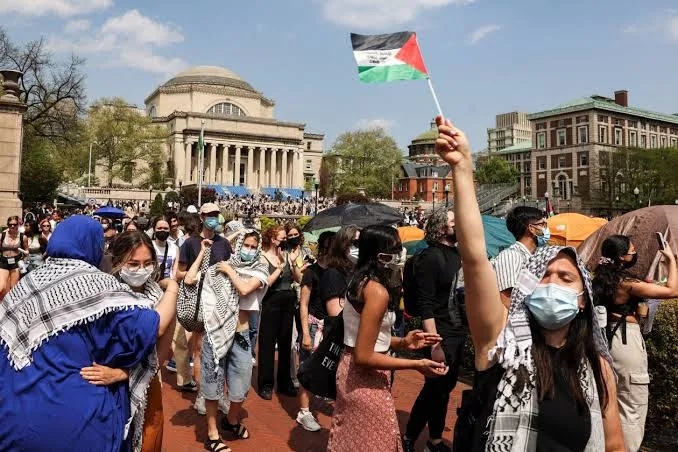
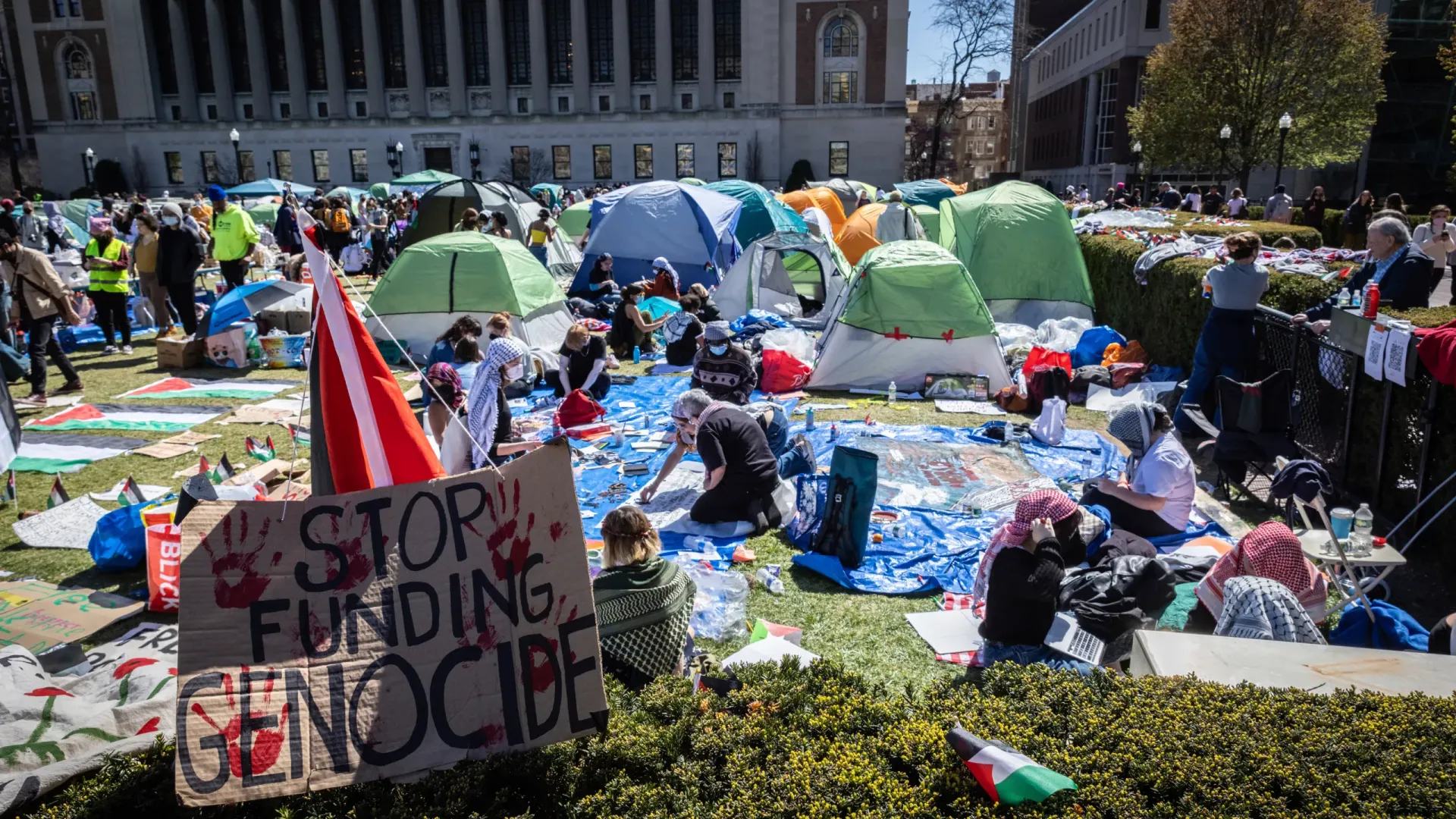
An investigation by The Intercept has found that Columbia University paid hundreds of thousands of dollars to pro-Israel organizations over the past three years, even as it aggressively cracked down on students who took to campus to demand it disclose and divest from precisely those financial ties.
According to a review of the university's tax filings, Columbia paid $100,000 to the Israel on Campus Coalition and $75,000 to the American Israel Education Foundation, the charitable arm of AIPAC, America's most powerful pro-Israel lobby, in the fiscal year ending in June 2024 alone. Over the past decade, the university paid AIPAC's charity arm a total of $250,000. Columbia also paid $450,000 to the United Jewish Appeal Federation of New York in the fiscal year ending June 2024, an organization that by its own account has spent hundreds of millions of dollars in Israel since October 2023, including tens of millions to support Israeli soldiers and their families. In the fiscal year ending June 2025, Columbia paid $7,200 to the Anti-Defamation League for what the university listed as "program services," and later announced a formal partnership with the ADL to conduct campus "training on antisemitism," even as the ADL's chief had publicly compared pro-Palestine student protesters to Islamist terrorists.
In sharp contrast, The Intercept's review of documents found that the university gave little to no equivalent funds to pro-Palestine, Arab, or Muslim organizations over the same period. While the pro-Israel organizations that received Columbia payments stand out for their explicit mission of advocating for US relations with Israel, no comparable groups advocating for Palestinians appear in the filings as having received funding.
The findings directly confirm what the students protesting had always alleged. The whole reason students were protesting in the first place, said Maryam Alwan, a Palestinian American activist who participated in the Columbia encampments before graduating in 2025, was because they knew the university was deeply invested in the genocide in Gaza. These findings, she said, confirm what we have been saying all along.
The simultaneity is striking. In the same fiscal year Columbia paid AIPAC's charity arm $100,000 and the Israel on Campus Coalition another $100,000, the university administration summarily suspended the pro-Palestine student groups Jewish Voice for Peace and Students for Justice in Palestine, had the New York City Police Department called to campus to arrest protesters on two separate occasions, and dismantled the solidarity encampments that had been among the largest in the United States. The students protesting were demanding that Columbia disclose and divest from exactly the kinds of ties the investigation has now confirmed.
Columbia sought to limit the political significance of the payments, with a spokesperson saying the grants went through a university-administered donor-advised fund, an arrangement where a nonprofit pools tax-deductible donations and lets donors direct specific distributions, and therefore did not come from the university's own operating funds. Financial experts told The Intercept that such structures are frequently used precisely to obscure donors' identities, since the fund itself, rather than the underlying donor, appears as the giver of record. "It's just so opaque," one expert told the outlet. "So you can essentially make donations and not be identified."
The arrangement does not diminish the political weight of what the filings reveal. Joseph Howley, an associate professor of classics at Columbia and a Jewish faculty member, told The Intercept that the findings confirm his worst suspicions since fall of 2023, calling pro-Israel and anti-Palestinian politics "the official policy of this institution," visible not only in Columbia's actions and speech but now in its resource allocation. Mahmoud Khalil, a lead protest negotiator whose arrest by federal immigration officials the ADL had welcomed, told The Intercept that Columbia should be investing in its students rather than bankrolling organizations that intimidate them, and accused the university's Board of Trustees of placing their commitment to Israel above their fiduciary duty, academic freedom, and the students they are supposed to serve.
The Israel on Campus Coalition, one of the beneficiary groups, describes its own mission as placing pro-Israel campus activism under one umbrella and working toward a future "where the anti-Israel movement is marginalized." It is, in other words, an organization whose explicit purpose is to suppress the kind of student advocacy Columbia was simultaneously arresting people for engaging in on its own campus, while paying the suppressor.