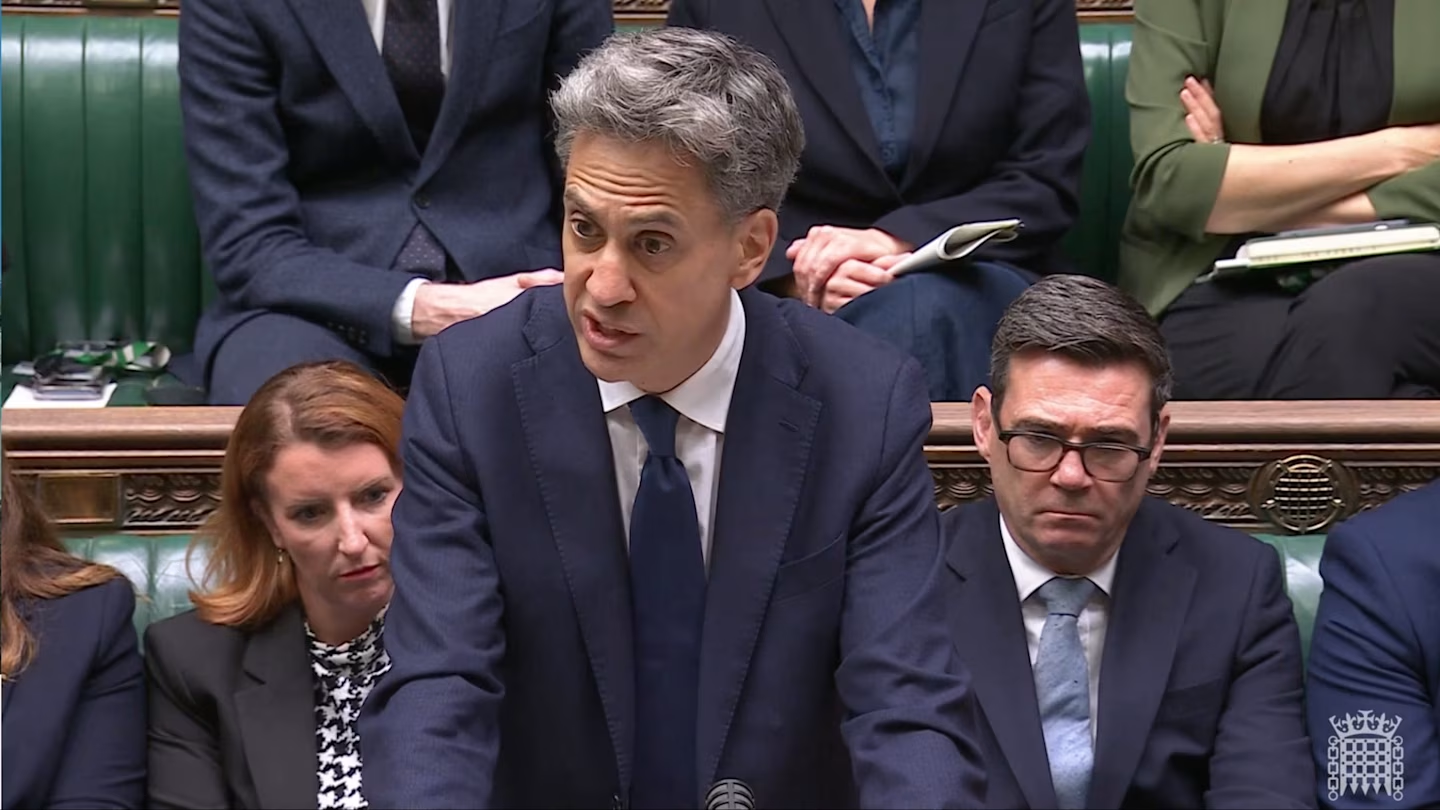

The United Kingdom is preparing to unveil what it has called a comprehensive response to Israel's settlement plans in the occupied West Bank in the coming weeks, as pressure mounts on the government to move from condemnation to concrete action against Israel's colonization of Palestinian land.
Foreign Secretary Ed Miliband said last month that the government would announce a package of measures against Israel over the E1 settlement project east of occupied Jerusalem, a plan that would effectively cut the occupied West Bank in two and destroy the prospect of a contiguous Palestinian state. According to reporting, the government of Prime Minister Andy Burnham is poised to announce a raft of new policies on Israel this month, including a ban on goods produced in illegal Israeli settlements, with Miliband said to be pushing for stronger measures.
The pledge came as the Labour Muslim Network and the International Centre of Justice for Palestinians published a legal briefing urging the British government to act urgently and comprehensively in response to the E1 project. The groups warned that the settlement scheme could destroy the future of a viable Palestinian state, and that settlement expansion, settler violence, and the forcible displacement of Palestinian communities across the occupied West Bank are accelerating on a daily basis.
The briefing set out a series of concrete demands. It called on the UK to impose a full ban on British citizens and businesses conducting economic and financial activity in illegal Israeli settlements and in the wider settlement economy, arguing that under Common Article 1 of the Geneva Conventions Britain is legally bound not only to respect international humanitarian law but to ensure respect for it. It urged the government to suspend all remaining arms export licenses to Israel, including for the F-35 components that make up around 15 percent of every jet, warplanes Israel has used extensively in its genocide in Gaza and its attacks on Lebanon and Iran. It also called on the UK to press for a UN Security Council resolution deploying international observers to monitor Israeli violations at the holy sites of occupied Jerusalem and the persecution of Muslim and Christian Palestinians.
The demands reflect the overwhelming sentiment of the Labour Party's own base. Polling of Labour members this year found that 87 percent support a ban on trade with Israeli settlements, with only 6 percent opposed. Yet pro-Israel lobby groups, including Labour Friends of Israel, which counts more than 70 MPs among its affiliates, are campaigning to weaken the government's response and to block a full ban on settlement goods, even publishing material that seeks to justify some of Israel's illegal settlements.
Israel, for its part, has responded to the growing European pressure not with restraint but with threats. Israel is considering expelling British and other European representatives from the international Gaza monitoring center in Kiryat Gat, in direct retaliation for the moves against its settlements. Israeli Foreign Minister Gideon Saar, with Netanyahu's approval, has already moved to expel Dutch representatives from the center after the Netherlands passed legislation banning trade with Israeli settlements, and Israel has signaled that Britain could be next as London prepares its own settlement measures.